
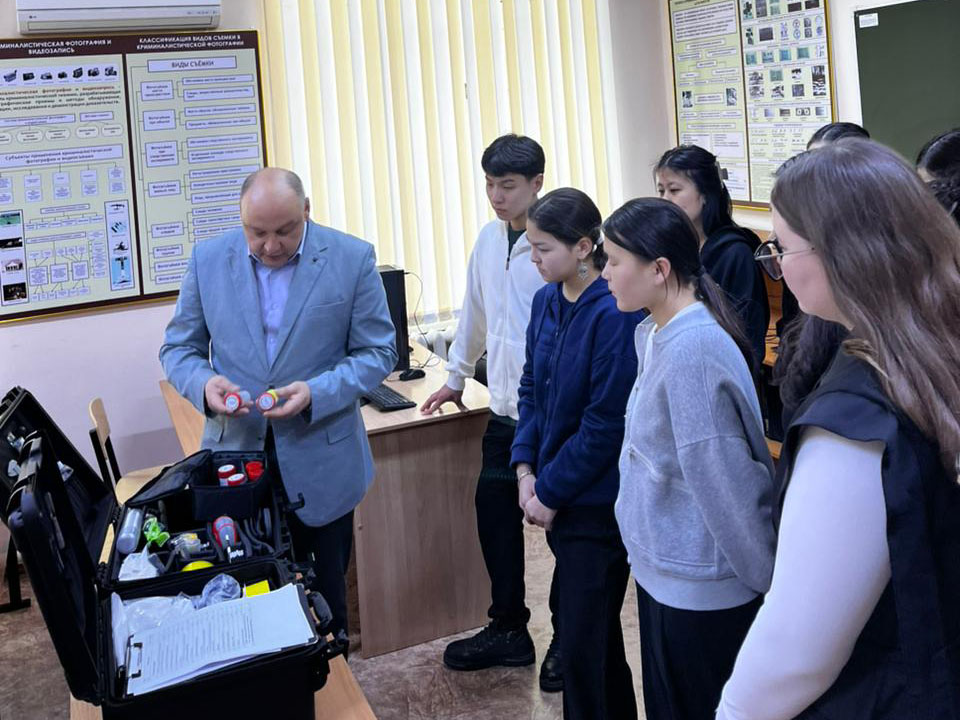
A career guidance meeting with college students majoring in Law was held at the West Kazakhstan Innovation and Technological University. The main purpose of the event was to introduce prospective applicants to the educational opportunities offered by the university, explain the advantages of obtaining higher education, and assist students in making an informed decision regarding their future professional development.
During the meeting, university lecturers provided detailed information about the content, structure, and professional orientation of the 6B04202 – “Law” educational program implemented at the university. In addition, the advantages of continuing education at the university after graduating from college were explained, including the specifics of the academic process, opportunities for participation in research activities, academic mobility programs, practical training, and prospects for professional development in the modern labor market.
As part of the event, the students were introduced to the university’s educational and practical facilities. In particular, demonstrations were conducted in the forensic laboratory, where students learned about crime scene investigation techniques, methods of collecting and documenting evidence, and the use of forensic equipment. Such practice-oriented demonstrations are aimed at developing an understanding of the importance of professional skills in the field of law.
Furthermore, the students were presented with a model of a mock trial, which allowed them to become familiar with the main stages of court proceedings and the professional roles of judges, prosecutors, and defense attorneys. This format enabled the students to gain a practical understanding of professional activities within the judicial and law enforcement systems.
During the meeting, college students received comprehensive information about educational opportunities at the university, the structure of academic programs, and directions for academic and professional development, and were able to ask questions of interest.
Such career guidance activities contribute to strengthening academic continuity between colleges and universities, fostering conscious professional choice among prospective applicants, and training highly qualified specialists in the field of law.