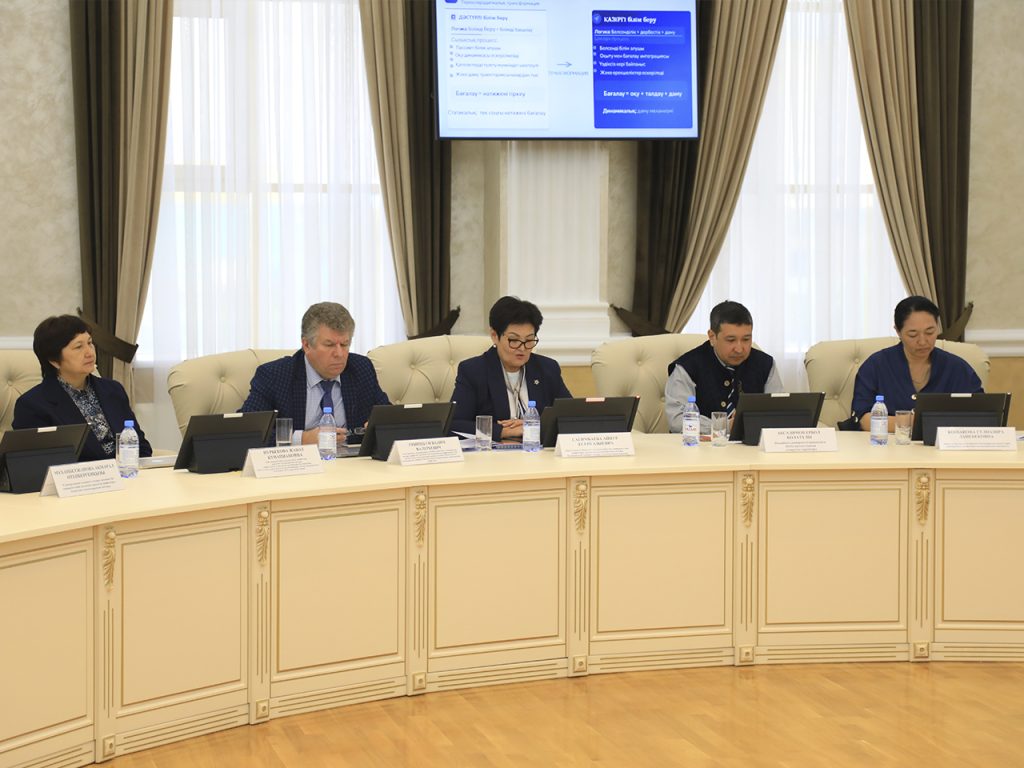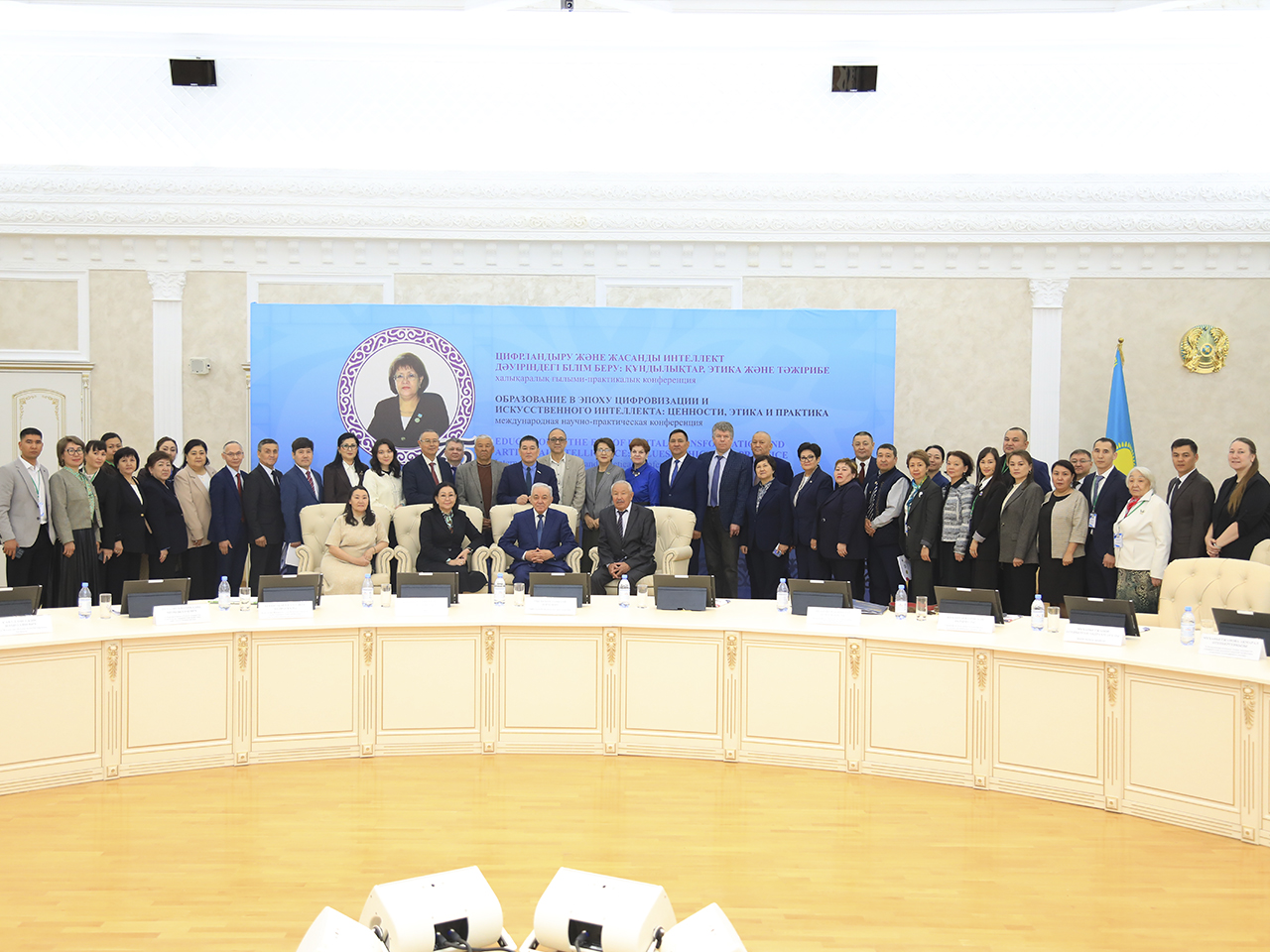
On April 24, 2026, the West Kazakhstan Innovative and Technological University held the International Scientific and Practical Conference entitled “Education in the Era of Digitalization and Artificial Intelligence: Values, Ethics, and Practice,” dedicated to the 75th anniversary of Doctor of Pedagogical Sciences, scholar-methodologist, Professor Aliya Mendeshkyzy Mukhanbetzhanova. The plenary session took place in the conference hall of the Atameken Palace of Arts.
The conference moderator, Doctor of Pedagogical Sciences Svetlana Mendygaliyevna Bakhisheva, Head of the Center for Educational Technologies and Blended Learning at the Institute of Education and Management of the West Kazakhstan Innovation and Technological University, opened the conference by giving the floor for introductory remarks to Doctor of Historical Sciences, Professor, Honorary Academician of the National Academy of Sciences of the Republic of Kazakhstan, and Chairman of the Founders’ Council of WKITU, Tuyakbay Zeyituly Rysbekov.
In his address, T.Z. Rysbekov emphasized that the rapid processes of digitalization and the advancement of artificial intelligence, while opening new opportunities for the field of education, simultaneously bring to the forefront a range of complex issues concerning the value-based, ethical, and practical dimensions of educational activity faced by the academic community.
The plenary session featured presentations by leading scholars from Kazakhstan, Uzbekistan, and the Russian Federation. The reports comprehensively examined pressing issues related to the transformation of education systems in the context of the rapid development of digitalization and artificial intelligence.
Particular attention was devoted to the integration of digital technologies into the educational process, the development of innovative pedagogical approaches, as well as the formation of digital competencies among both students and educators.
In addition, presentations addressing the ethical aspects of the use of artificial intelligence in education were delivered. The participants were introduced to the results of scientific research, as well as practical cases involving the implementation of digital platforms, online learning, and intelligent tutoring systems. Participants shared experiences from their respective countries, highlighting not only achievements but also current challenges that require collective reflection and joint solutions.
The plenary session became an important platform for fostering professional dialogue, exchanging views, and identifying future prospects for the development of contemporary education.