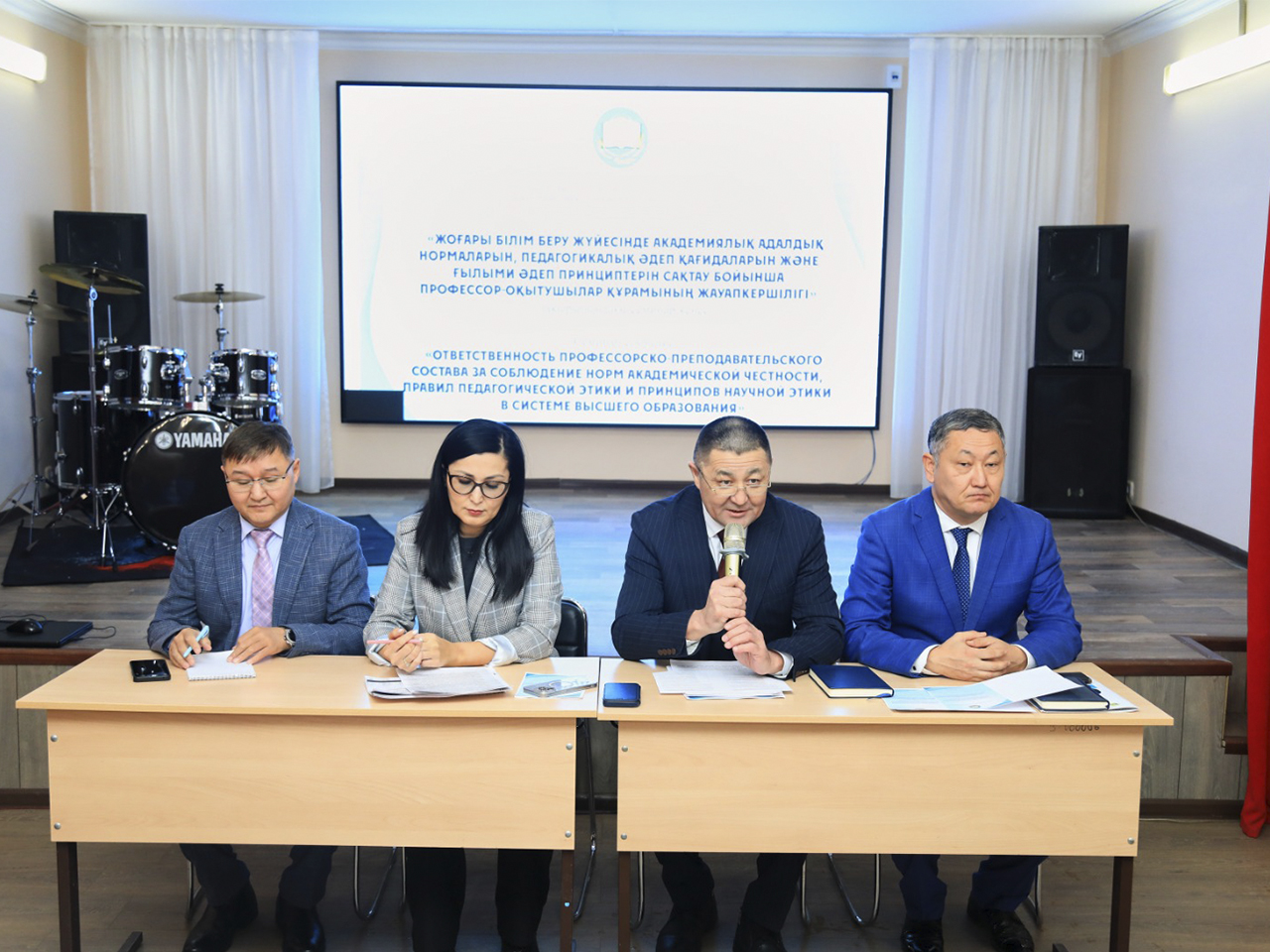
On January 22, 2026, a seminar on the topic: “The Responsibility of Faculty for Adherence to Academic Integrity Standards, Pedagogical Ethics Rules, and Principles of Research Ethics in Higher Education” was held at West Kazakhstan Innovation and Technology University.
Representatives of the university’s management and faculty members participated in the event.
The purpose of the seminar was to clarify and discuss the requirements for adhering to academic integrity standards, teaching and research ethics, and to enhance the faculty’s responsibility for the quality of educational and research activities in the context of improving the higher and postgraduate education system.
During the seminar, participants familiarized themselves with the materials of the annual forum of the Ministry of Science and Higher Education of the Republic of Kazakhstan, “Quality Assurance in Higher Education: Status and Development Prospects.” The university’s vice-rectors delivered presentations on the forum’s thematic sessions. First vice-rector for Academic and Methodological affairs Mashanova Samal Amangeldievna presented materials from the session “Quality Assurance and Improvement of the State Regulation System in Higher and Postgraduate Education.”
Vice-rector for research and international relations Zhubantaev Izimgali Nurymovich presented materials from the session “Assessing the Quality of Research Results: New Approaches.”
Vice-rector for educationa affairs Abekeshev Ayanbek Imanbaevich emphasized adherence to ethical standards in his report “Ensuring Academic Standards and Pedagogical Ethics.”
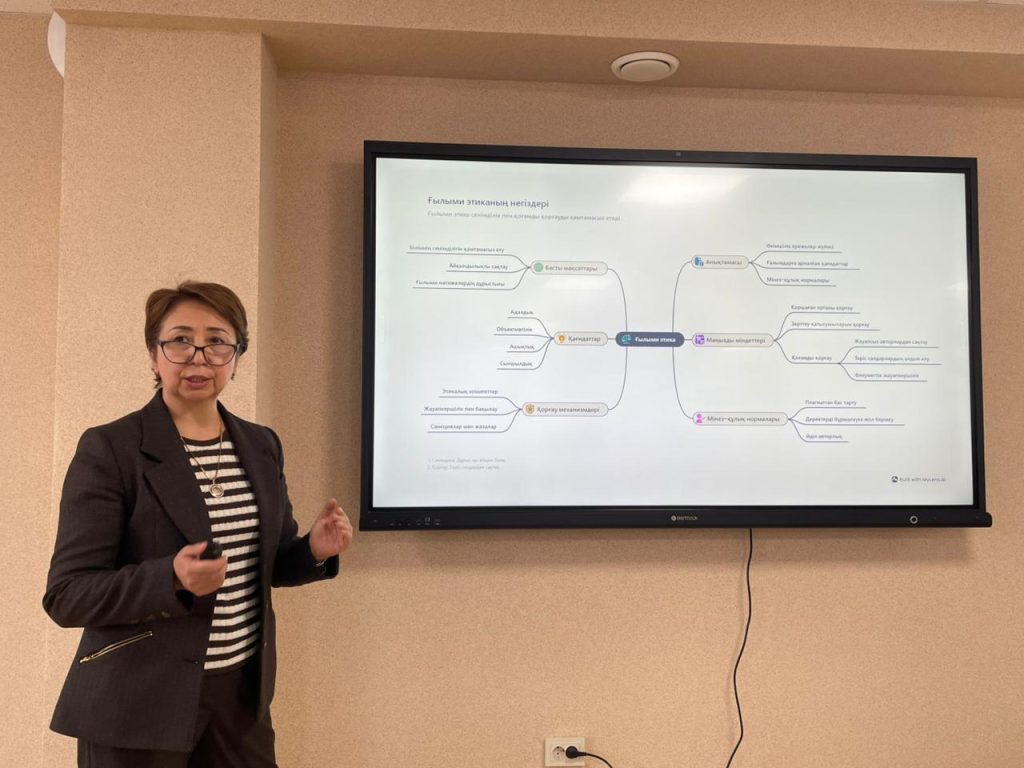
Associate professor Kazhiakparova Zhadyra Serikovna delivered a report at the seminar, “The Ethical Standards of Higher and Postgraduate Education.” In her presentation, she examined the ethical principles and limitations of using artificial intelligence in scientific research, issues of researcher responsibility, and adherence to academic integrity standards when using digital and intelligent technologies.
Following the seminar, participants emphasized the importance of developing a sustainable culture of academic integrity, adhering to ethical principles in the implementation of educational programs and scientific research, and the need for systematic prevention of academic ethics violations.