

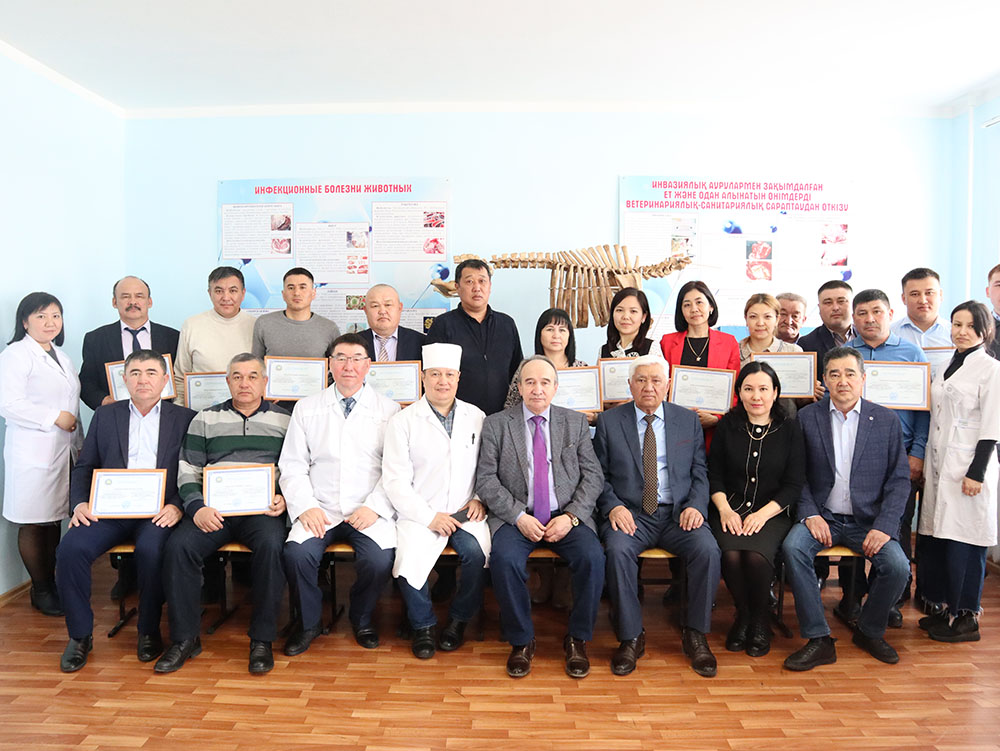
This year, from 28th of March to the 1 of April, on the the Department of Ecology and Biotechnology of Engineering and Humanitarian Faculty of West Kazakhstan Innovative and Technology University, advanced training courses was held for leaders and specialists of veterinary stations of Atyrau and West Kazakhstan regions, as well as teachers of Higher Agrarian and Technical College of Uralsk city and teachers of WKITU. A total of 16 students took part in the advanced training courses.
Scientists of the Department of Ecology and Biotechnology, Doctor of Veterinary Sciences, Professor Baitlessov E.U., Doctor of Veterinary Sciences, Professor Shalmenov M.Sh., Doctor of Veterinary Sciences, Professor Absatirov G.G., Doctor of Biological Sciences, Professor Kanatbaev S.G., Candidate of Veterinary Sciences, Associate Professor Dnekeshev A.K., took part in the advanced training courses as tutors, who have quite significant scientific, practical and teaching experience.

Advanced training courses were held on the basis of the Research Laboratory of Biotechnology of the EHF WKITU, which is a research and production complex equipped with, equipped with modern instruments and equipment and allowing high-level scientific research in priority areas in the field of agriculture, veterinary medicine, meat and dairy products processing technology, as well as in environmental and chemical areas. On the basis of the research laboratory of biotechnology there is a vivarium, which is a research and production complex that meets international standards, on the basis of which scientific research is carried out in biotechnology, embryo transplantation and other priority areas of the veterinary service. Scientists, graduate students, undergraduates, university students have the opportunity to conduct practical research, as well as perform laboratory work on animals. To do this, the veterinary clinic contains cattle, small cattle, birds (chickens, quails, pheasants), rabbits, laboratory mice. In general, the presence of this complex contributes to improving the quality of educational services provided and the level of professional competencies of students.
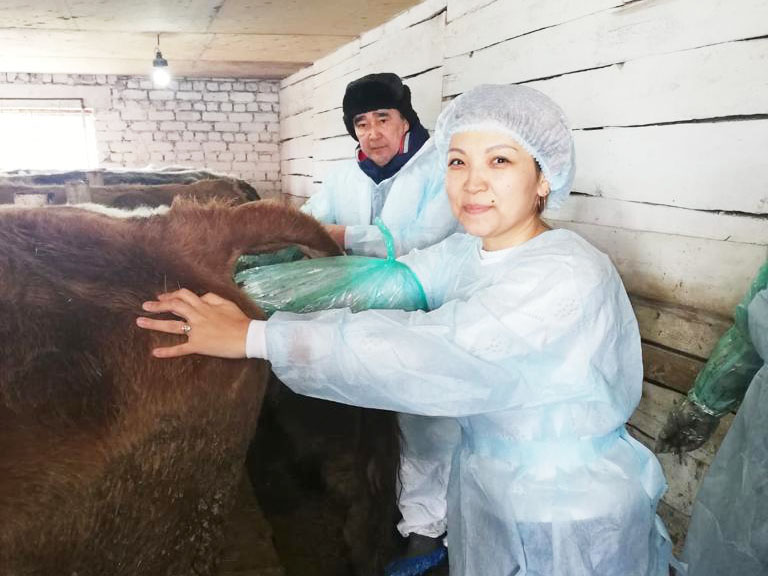
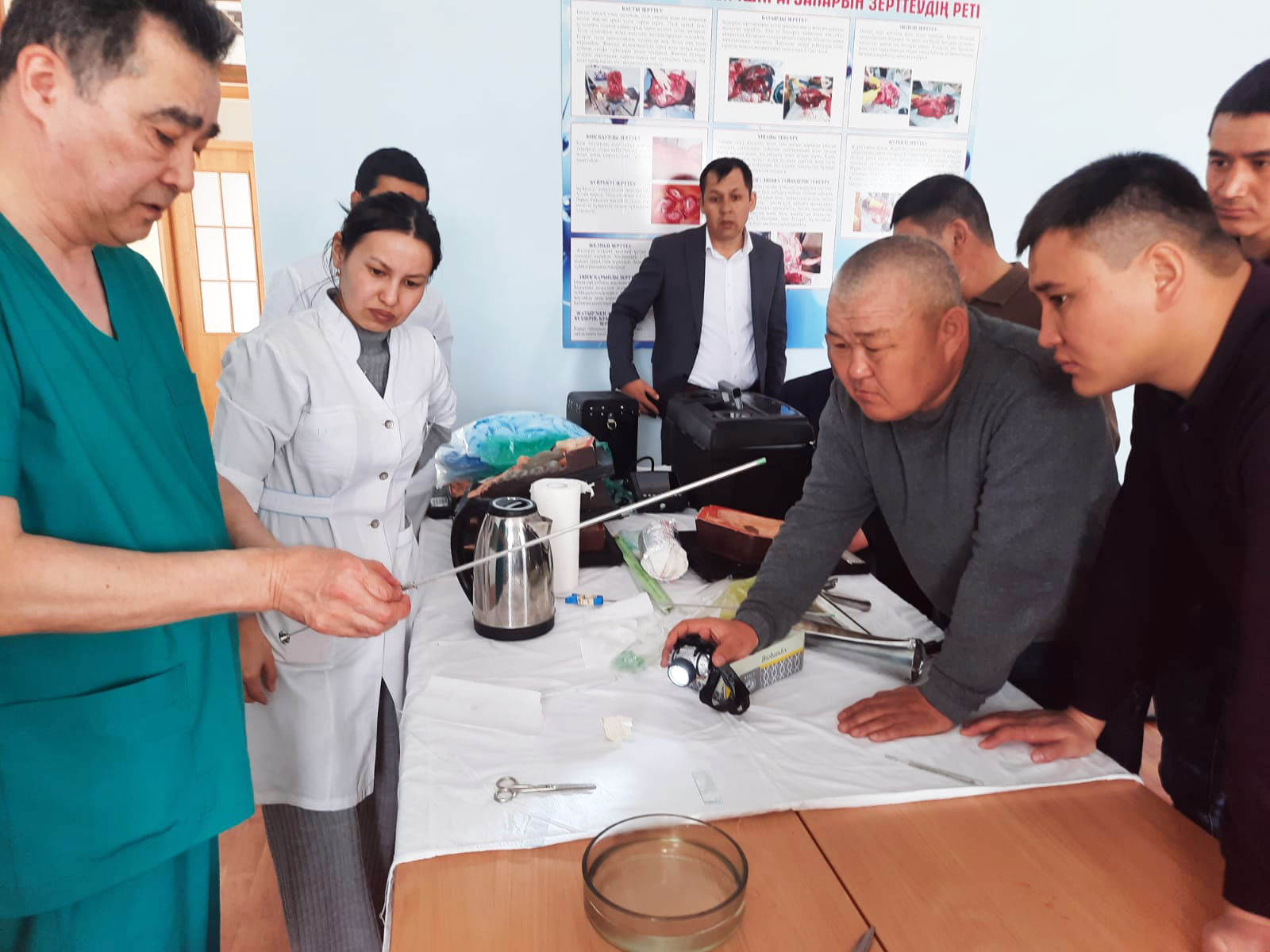
The theoretical part of the courses was conducted using modern information technologies in the format of presentations and demonstrations of specialized videos. In the practical part, the students were shown modern methods for diagnosing and preventing infectious and parasitic pathologies on biomaterials taken from animals of the university veterinary clinic. Also, in the conditions of a veterinary clinic equipped with the necessary means of fixation and the use of modern tools, modern methods of diagnostics and prevention of infectious and parasitic pathologies on biomaterials taken from animals of the university veterinary clinic. Also, in the conditions of a veterinary clinic equipped with the necessary means of fixation and the use of modern instruments, modern methods of animal reproduction biotechnology and certain surgical methods for the treatment and prevention of pathologies were demonstrated directly on farm animals.
After each cycle of classes, discussions and an exchange of views took place. At the end of the course, the students were awarded certificates. Such courses were approved by the audience and will be continued in the future.