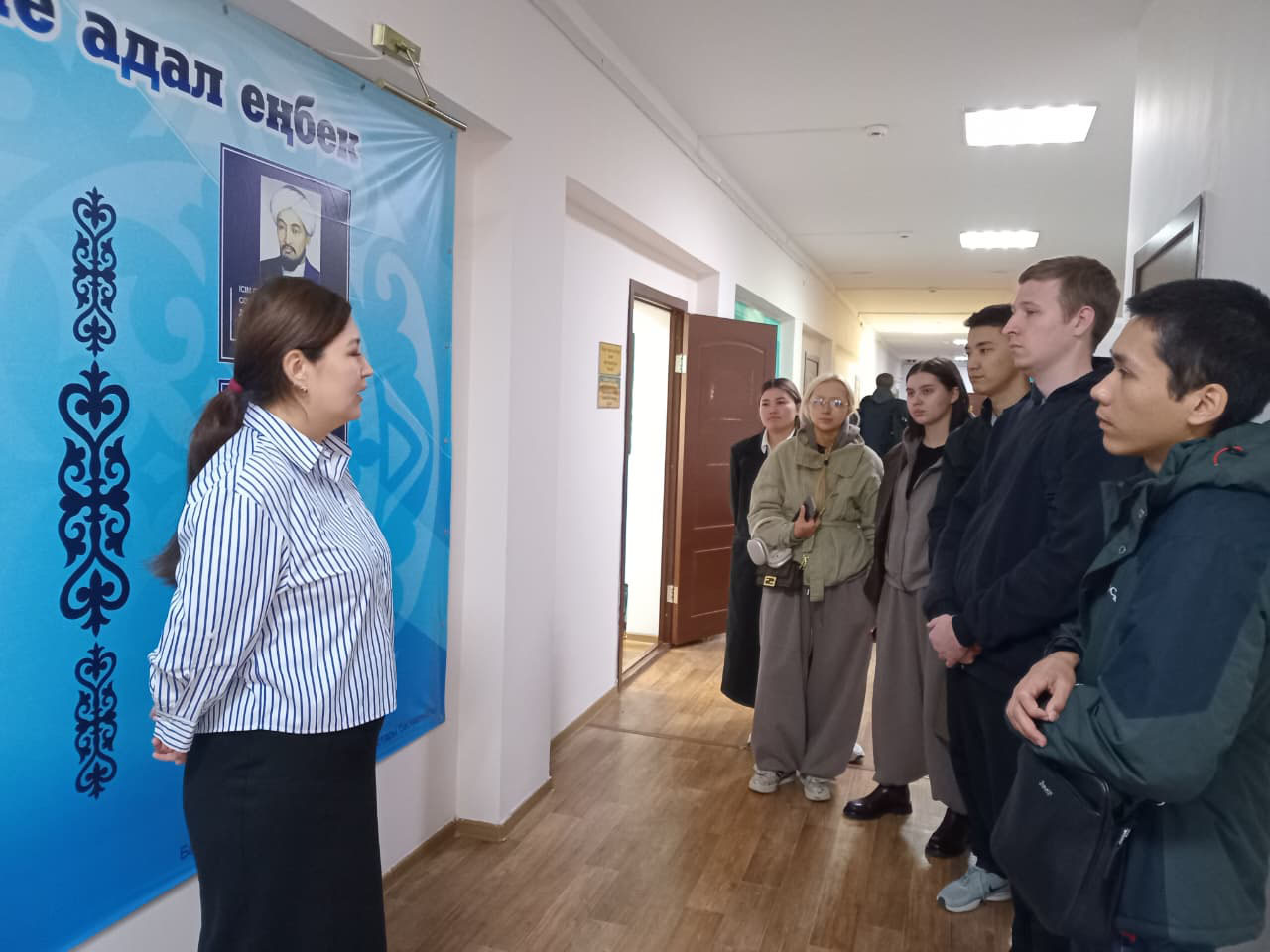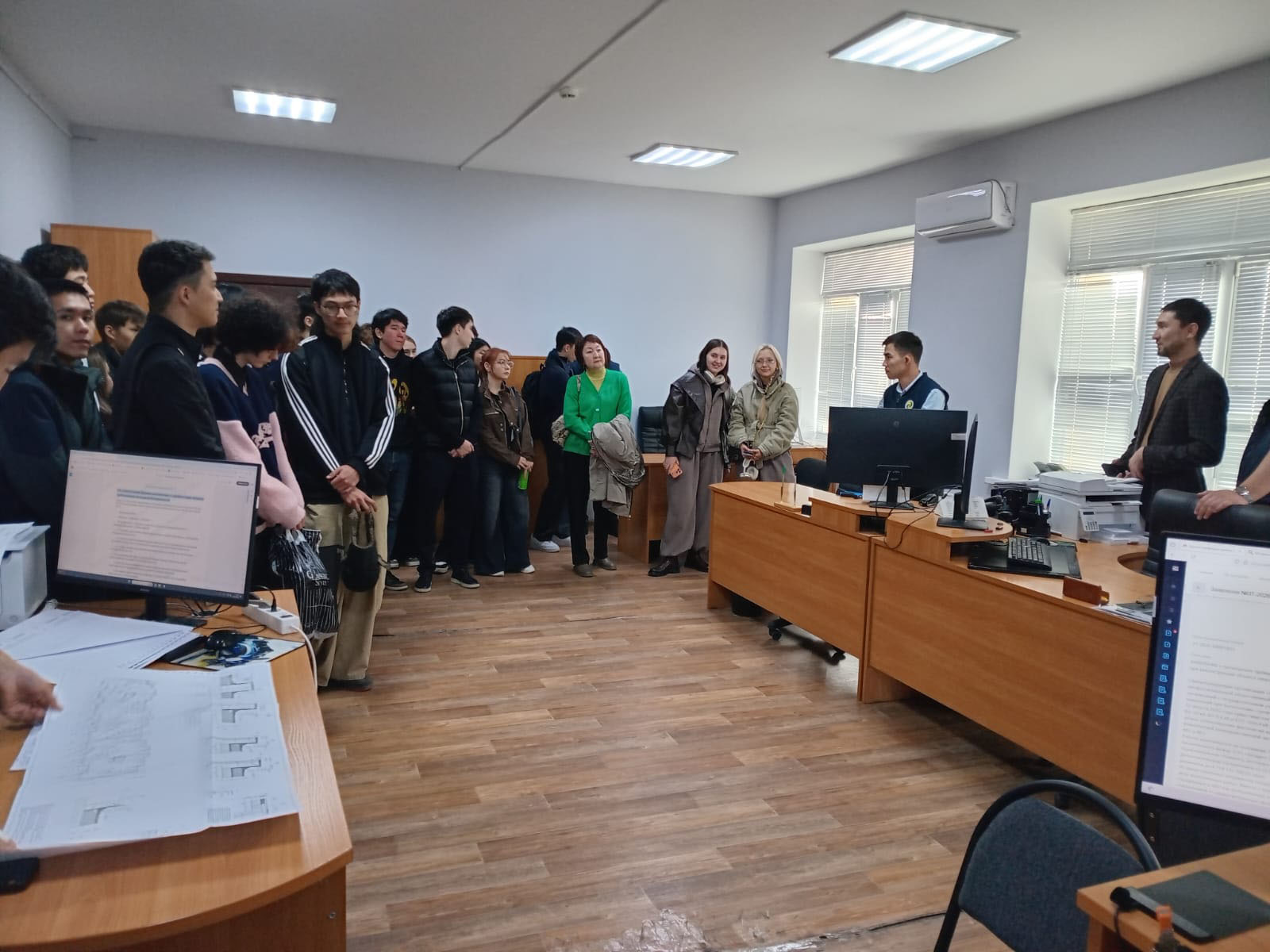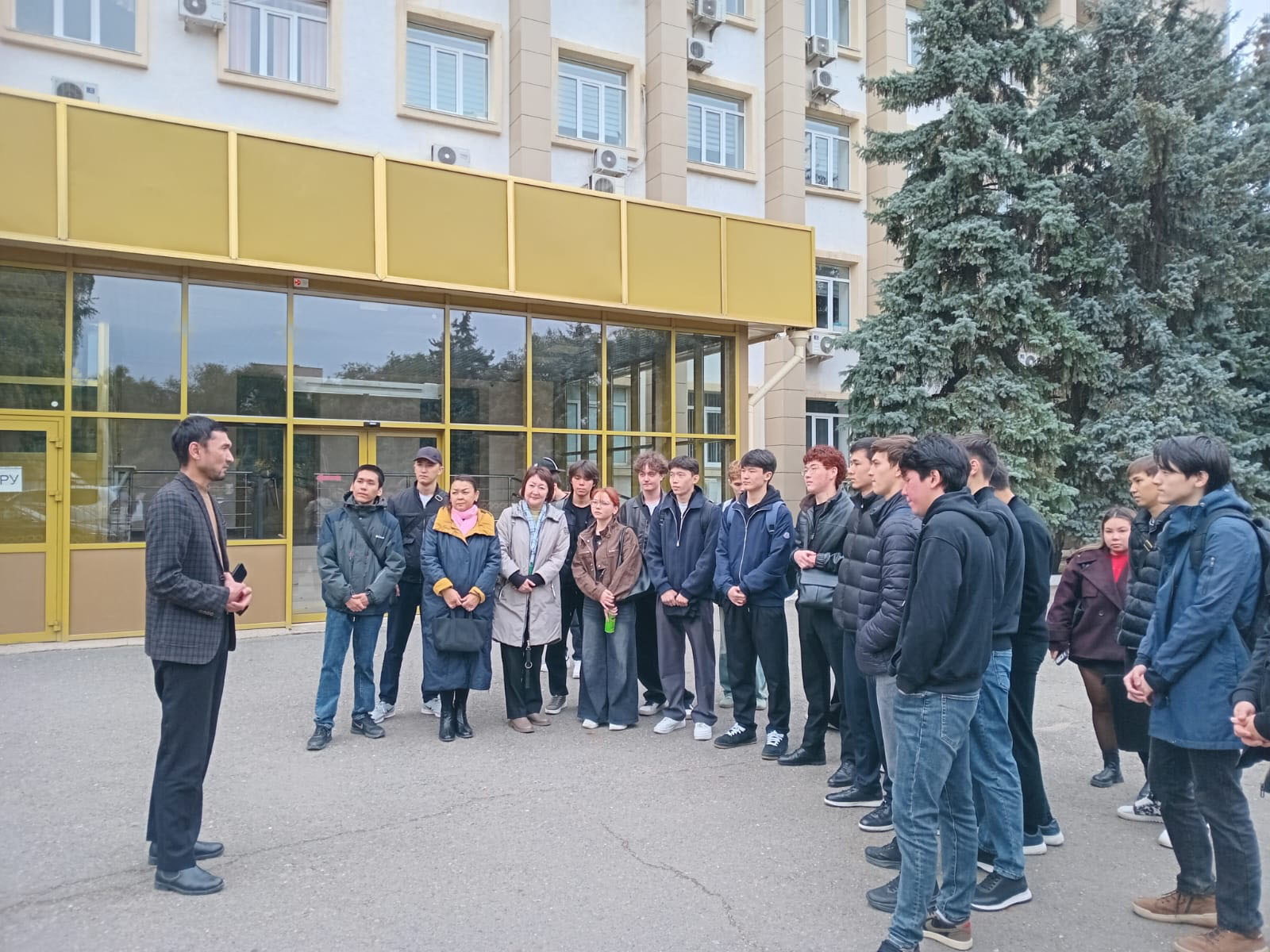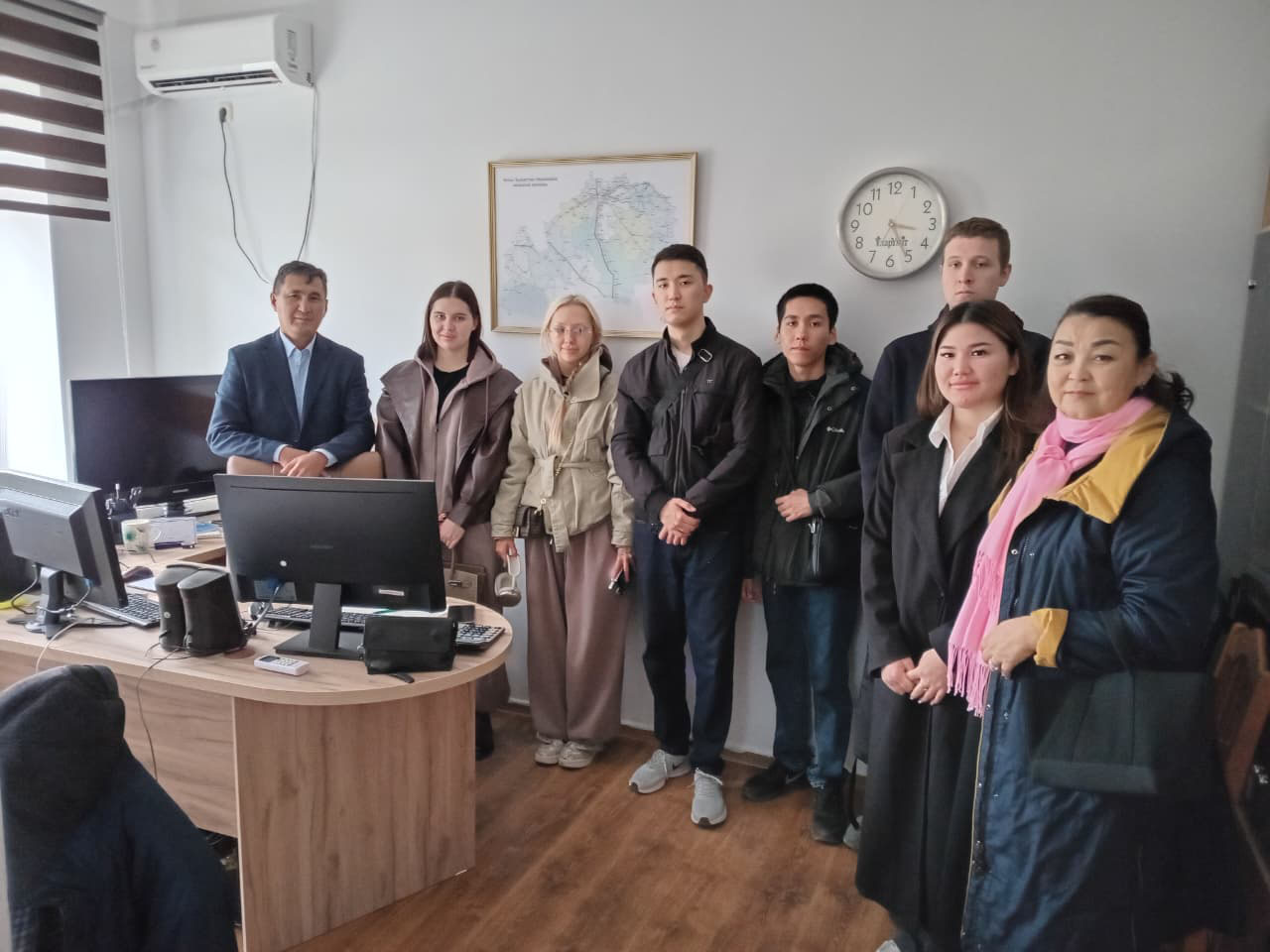
As part of practical training, strengthening cooperation between academia and industry, and providing career guidance to students, an Open Day was held at the Department of State Architectural and Construction Control (GASK) and the Department of Land Relations. The event brought together students from the educational programs 6B07303 “Land Management and Cadastre,” 6B07302 “Construction,” and 6B07301 “Architecture”.
During their visit to the Department of Land Relations, the students gained an in-depth understanding of its key areas of activity and the responsibilities of specialists involved in land resource management. Representatives of the department provided detailed information on the procedures for allocating and using land plots for their designated purposes, maintaining the state land cadastre, regulating land relations, as well as modern approaches to the rational use and protection of land resources. Particular attention was paid to the practical aspects of the work of land management specialists, including the use of geographic information systems (GIS), digital maps, and geodetic technologies in spatial planning. The session dedicated to the activities of the Department of State Architectural and Construction Control (GASK) was equally informative and practice-oriented. The main mission of the institution is to ensure compliance with urban planning regulations, guarantee the quality, reliability, and safety of buildings and structures under construction, and protect the legitimate rights and interests of citizens and the state in the field of architectural and construction activities. During the meeting, students had the opportunity to ask the heads and specialists of the departments questions, receive comprehensive information about professional requirements in the field, and discuss opportunities for completing industrial and pre-graduation internships with the prospect of subsequent employment. Holding such comprehensive events contributes to strengthening strategic cooperation between the university and specialized government institutions, improving the quality of students’ practical training, and helping them gain a clearer understanding of their future professional careers.