
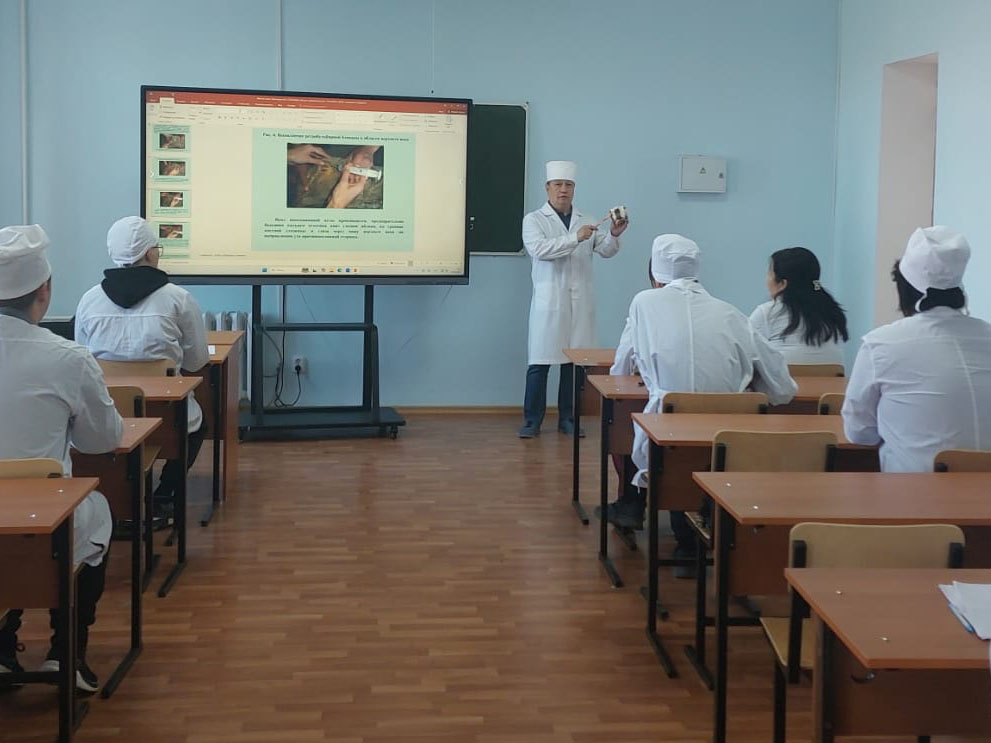
On April 27, 2026, under the supervision of Associate Professor of the Department of Veterinary Medicine and Technosphere Safety of the Institute of Industry Technologies of West Kazakhstan Innovative and Technological University, Candidate of Veterinary Sciences A.K. Dnekeshev, a master class was organized on the topic: “Morphological Features and Therapeutic Effectiveness of Blockade in Invasive Eye Diseases in Sheep.” The event was held at the Veterinary Clinic of West Kazakhstan Innovative and Technological University, in classroom 204, using an interactive whiteboard, posters, and an anatomical specimen of a sheep skull.
The purpose of the master class was to deepen students’ professional knowledge in the field of veterinary ophthalmology and parasitology, to improve practical skills in performing therapeutic blockades, and to study the anatomical and topographical features of the organs of vision in sheep. Particular attention was paid to the issues of diagnosis, pathogenesis, and комплекс treatment of eye diseases of invasive origin.
During the master class, the morphological features of the structure of the sheep’s skull and orbital region, which are important for performing therapeutic procedures, were examined in detail. Anatomical landmarks for the safe and effective administration of blockade, the technique of drug injection, indications, and possible limitations of the method were demonstrated using an anatomical specimen. Clinical examples of the use of blockade as part of комплекс therapy were also presented.
A distinctive feature of the event was the combination of theoretical material with practical demonstration on an anatomical object and the use of modern visual teaching aids. This format contributed to better understanding of the material, the development of clinical thinking, and increased student interest in practical veterinary medicine.
In conclusion, it should be noted that the master class had high educational and practical significance, contributing to the development of students’ professional competencies and strengthening the link between theoretical training and practical activities of future veterinary specialists.